Turn an ambiguous business request into a sourced, governed, build-ready AI product — then move it through human decision gates and measure what it earns. This is a live demonstration of the AI Business Partner function, built for Atlas.
Unofficial prototype · Not connected to Atlas systems · Calculations illustrativeThe Permian execution engine, the Moser distributed-power fleet, reserved Caterpillar capacity, and the balance sheet combine into one product: bridge-to-permanent private grids for 50–500 MW mission-critical loads. The transformation is from selling tons and renting generators to owning critical infrastructure under multi-year contracts. AI becomes the decision layer that makes the opportunity funnel, project delivery, and operations repeatable.
Bridge fleet in gold, permanent capacity in navy. Company targets; interpolation between disclosed milestones is illustrative.
Load, timing, site, gas, permits, credit, economics — screened against a standard rubric.
Mobile power supports construction, commissioning, and ramp while the plant is built.
Atlas engineers and constructs dedicated stationary generation behind the meter.
Atlas finances, monitors, services — and carries the capital risk.
The customer buys power under a multi-year PPA with extension options.
None of these was random. Each acquisition and order closed a gap in the same product: schedule-certain private power, delivered and operated by one company.
A 42-mile fully electric conveyor — the reference case for complex, capital-intensive infrastructure delivered on Atlas's own schedule.
~212 MW of distributed generation, 900+ mobile units, harsh-environment field service, telemetry, and in-house remanufacturing — per the acquisition materials.
A 240 MW order plus a ~1.4 GW framework — roughly 1.6 GW of secured or reserved engines while competitors wait in equipment queues.
Build-own-operate converts customer capex into opex. Atlas carries execution and capital risk; the customer buys an operating outcome.
Bridge assets collapse the gap between site readiness and utility interconnection.
Reserved engines remove one of the largest project risks in the market today.
EPC and field operating history lowers perceived delivery risk for counterparties.
Customers buy power, not a power company. Atlas finances the plant.
Commission the first permanent site and publish reliability and execution results.
Additional 50–500 MW PPAs across data centers, manufacturing, and industrial loads.
Project-level capital plus gas, electrical, controls, and commissioning partners.
Opportunity underwriting, project controls, and remote operations become repeatable systems.
Private-grid infrastructure company — while the sand and logistics engine keeps funding it.
Every figure this site displays traces to a machine-readable facts file
— rendered live below from /data/atlas-facts.json. The method classifies
claims five ways; only the first two ever reach a public surface. Inferences and unknowns
stay in private workpapers. In regulatory, commercial, legal, investor, and customer
workflows, this line is the whole game: the system never promotes an inference
into a fact.
Loading facts…
Revalidate every source before external use — URLs and facts change.
A structured first pass — not an engineering or investment model. Unit math uses public equipment ratings; economics pro-rate the one public benchmark (the first 120 MW PPA's ~$50–55M annualized Adj. FCF).
Run a scenario to generate the brief.
The front door between the business and the builders. A vague need goes in; a scoped product with acceptance criteria, evaluation, governance gates, and an adoption plan comes out.
Generate a brief to see the output.
Winning the PPA is the start. Every project must be constructed, commissioned, and operated — usually in remote country where labor is the quiet constraint. The workforce plan belongs in the same room as the power plan.
Civil, mechanical, and electrical crews at peak headcount — mobilized to sites the labor market barely reaches.
Controls, SCADA, and protection engineers — the scarce skills that decide whether the energization date holds.
24/7 plant operators paired with remote monitoring — the Moser telemetry DNA, scaled up.
Field technicians and in-house remanufacturing keep the fleet earning through the whole contract.
Forecasting labor demand from the project pipeline — role, count, timing, and location per signed megawatt — is exactly the kind of request the intake process turns into a governed product.
Every AI product in this operating model moves through the same lifecycle — and four of the nine steps are human decision gates. All investment, permitting, legal, customer, safety, and public-facing decisions require human approval. No exceptions, including this prototype.
The request enters through the front door — never a side channel.
Business owner + AI partner define the decision and today's baseline.
Data sources are connected and classified — approved, restricted, or excluded.
Output structure defined; every human sign-off point mapped before build.
Privacy, safety, and operational reviews happen early — not at launch.
The pilot runs against a frozen evaluation set. No moving targets.
Results measured against the pre-AI baseline — the honest denominator.
Leadership makes the call with evidence in hand. Stopping is a valid outcome.
Adoption, support, data freshness, and return tracked after launch — forever.
Signal was designed and shipped in a weekend, using the same evidence discipline it demonstrates. Imagine it pointed at real systems.
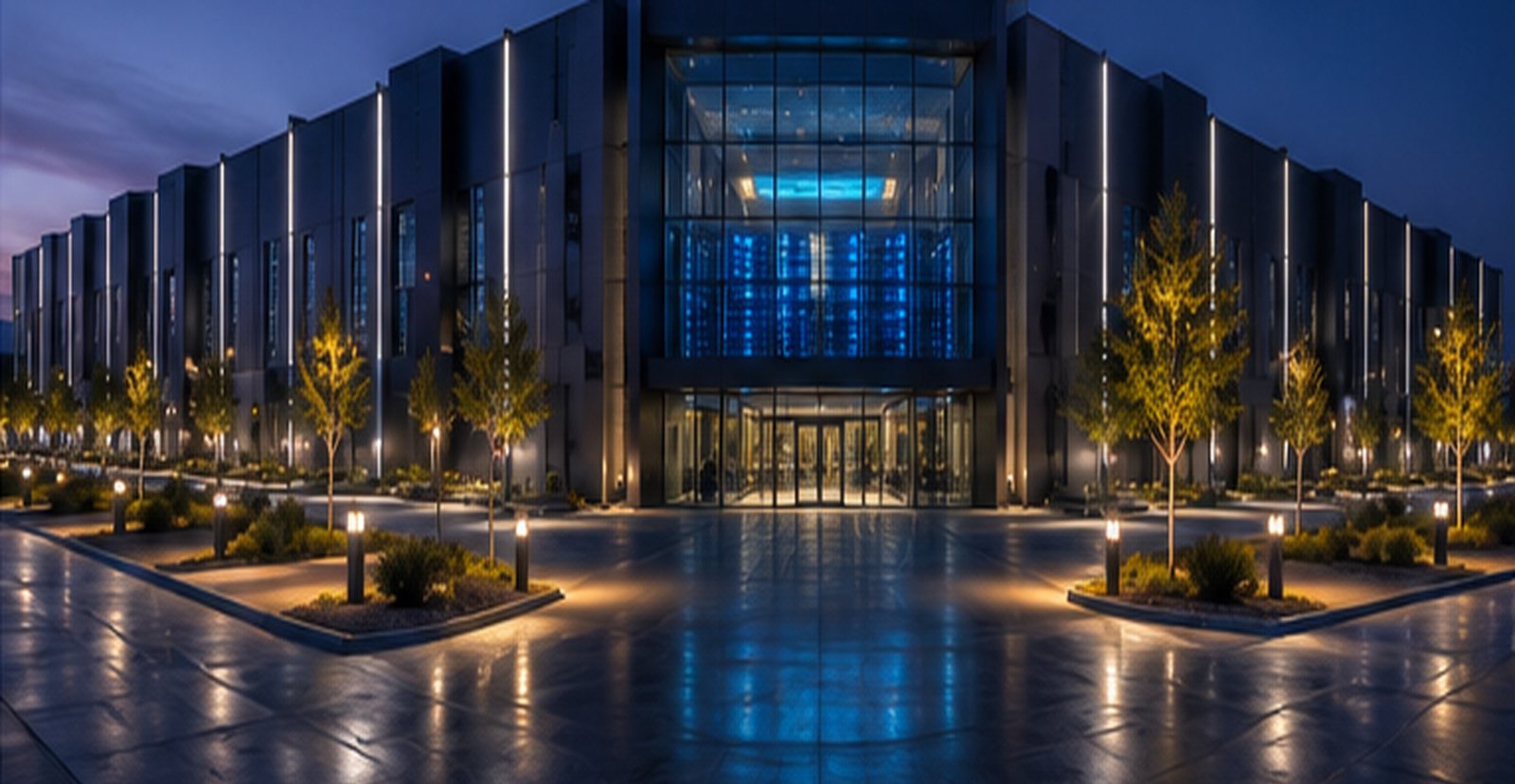
Concept rendering